How will AI and automation reshape the labour market? Will Slovakia have enough “good jobs” in the future? As we face demographic shifts, brain drain, and geopolitical tensions, how can Slovakia remain competitive?
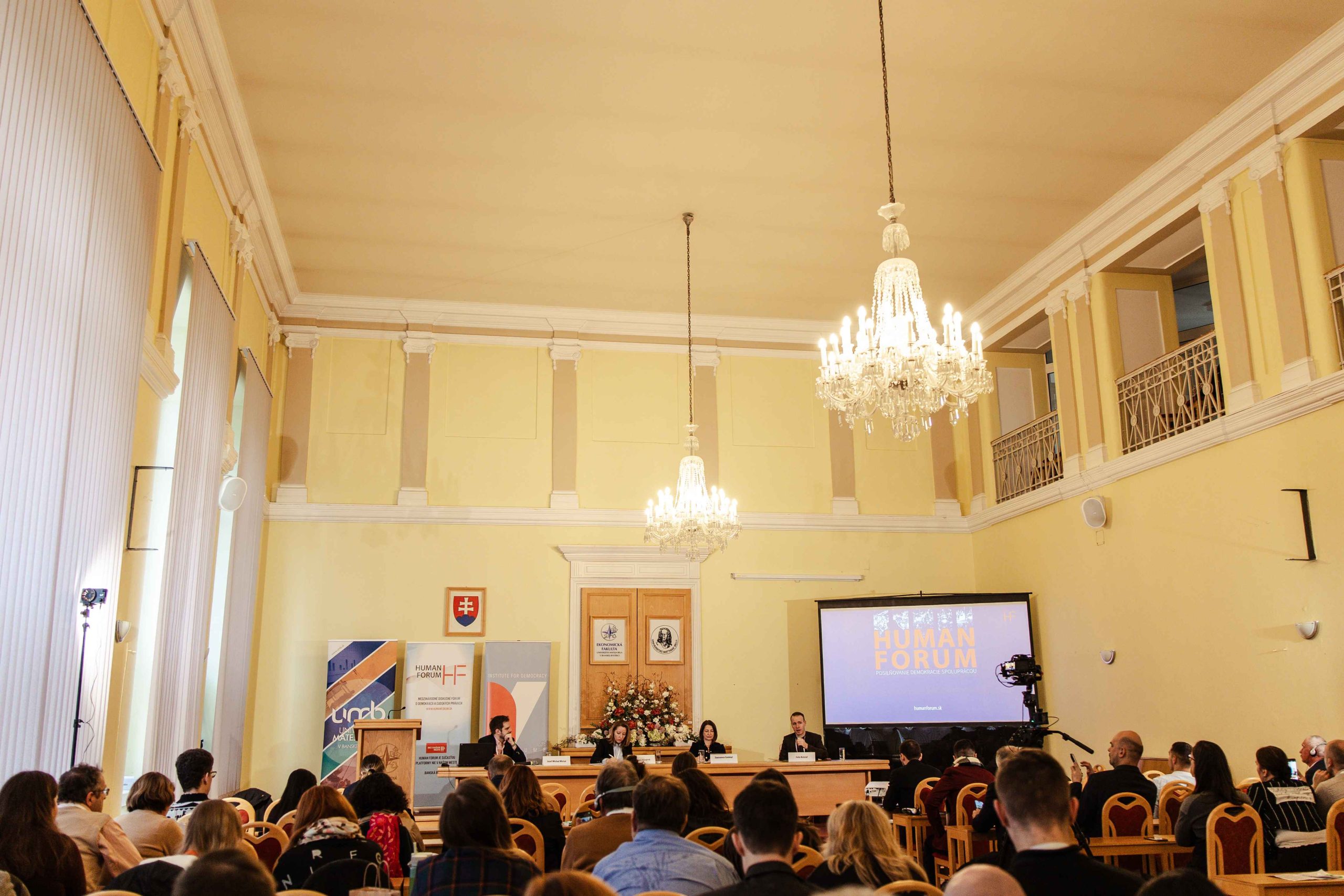
These pressing questions were at the heart of a thought-provoking discussion with Prof. Martin Kahanec, a leading labour economist, who engaged with students and faculty at Matej Bel University (UMB). The discussion with students and staff at UMB, organized as part of the BRRIDGE project, explored the challenges and opportunities Slovakia faces in an increasingly automated and globalized world.
The Future of Work: Will We Have Enough Good Jobs?
Advancements in AI and automation are transforming industries at an unprecedented pace, raising concerns about job security and the need for new skills. While automation will undoubtedly displace some jobs, it also has the potential to create new ones, especially in sectors that require creativity, adaptability, and problem-solving skills.
However, for Slovakia to harness these opportunities, investment in education, research, and innovation is crucial. Without strategic reforms, the country risks falling behind as global competition for talent intensifies.
Demographic Shifts and the Talent Shortage
Slovakia faces a major demographic challenge: an aging population, emigration of young talent, and a limited ability to attract skilled workers from abroad. Unlike Western Europe, Slovakia is not a magnet for global talent, making it difficult to fill high-skilled positions.
Prof. Kahanec highlighted the importance of building a strong innovation ecosystem and ensuring fair working conditions to retain and attract talent. Strengthening vocational education, improving labour mobility, and creating a more inclusive society are key steps in addressing these challenges.
Geopolitical Risks: What Do Global Tensions Mean for Slovakia?
In an era of shifting geopolitical dynamics—including tensions between the US and China, the war in Ukraine, and debates over the future of the EU—small open economies like Slovakia must navigate uncertainty.
Economic dependence on global supply chains makes Slovakia vulnerable to external shocks. To mitigate these risks, the country must strengthen regional cooperation, diversify its economy, and actively engage in shaping European policies.
A Successful, Safe, and Fair Slovakia – How Can We Achieve It?
Prof. Kahanec outlined several key pillars for Slovakia’s future success:
🔹 Strong institutions and the rule of law – Transparency, an efficient public administration, and clear EU alignment are essential for long-term economic growth and investor confidence.
🔹 Investment in education and innovation – Slovakia lags behind in research and development funding. Stronger collaboration between universities and businesses is needed to bridge this gap.
🔹 Social cohesion and equal opportunities – Regional disparities remain one of Slovakia’s biggest challenges. Targeted investments in education, infrastructure, and local economies can help reduce inequalities.
🔹 Finding our own path – Slovakia should avoid falling into the “narrative of failure.” While some look to the Baltic states as models, they, too, face brain drain and growing inequalities. Slovakia must define its own strategy for success.
Slovakia has the potential to thrive in a rapidly changing world—but only if it invests in its people, institutions, and future-oriented industries.